
It’s official, we’re on. The 2021 Season kicked off on January 9th and we met on Saturday (9th) and Sunday (10th) to explore the three different challenges: Game Design, Infinite Recharge at Home, and Innovation Challenge. After a thorough analysis, we have a concrete timeline and plan to proceed with, and specific ways in which we can maximize our effectiveness and success.
Game Design Challenge
While we’ve known for a while now that the challenge would be to design our own game, the specifics and constraints of that challenge is what we got at kickoff.
The most notable of these constraints is the use of chain for the game. While it’s not required to use the chain, it is necessary for the Concept Award (the award given for best overall game). Since we are striving for the best (always) it’s necessary for us to include the chain element. It does not say in what way we must incorporate this chain, but simply that it must be in our design somehow.
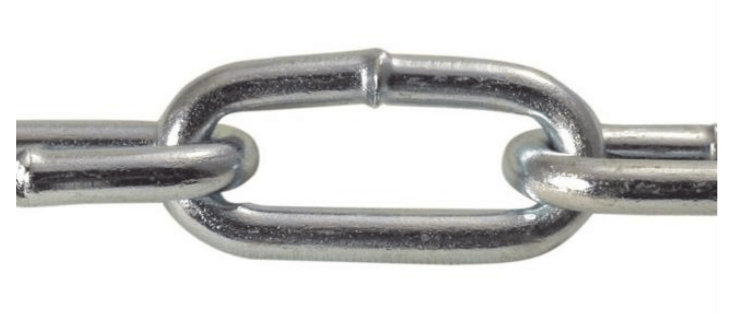
In addition to this element, there are restrictions on how large the field and robot can be. But, aside from these quite broad restrictions, we have a lot of versatility to create the game we wish to create. There are many aspects that go into creating an effective game – some that we’ve talked about at meetings and others that we haven’t yet – and therefore we’re allocated a fair bit of time at the start of the season to account for all of these aspects in our creation of the idea for the game. I will probably write an entirely separate blog about previous game designs and what we can learn from them in designing our own.
Once we’ve finalized the idea and game concept, we will proceed by developing a detailed field CAD, scoring guide and breakdown, and forming our essays in such a way as to effectively present the idea.
Infinite Recharge at Home
While we likely won’t be playing Infinite Recharge at competitions any time soon (if at all), FIRST has created an interesting alternative that should be plenty of fun nevertheless. The first element of the Infinite Recharge at Home challenge is the judging process, wherein we will present our robot and its features (as if at a normal competition). While there is some preparation to be done for that – mostly to do with getting the presentation perfected – the real preparation will come for the Skills Challenge. To allow teams to perform this challenge on their own, FIRST has made a “field” (30’x15′ zone) with various markers on the floor in which the robot will demonstrate its capabilities.
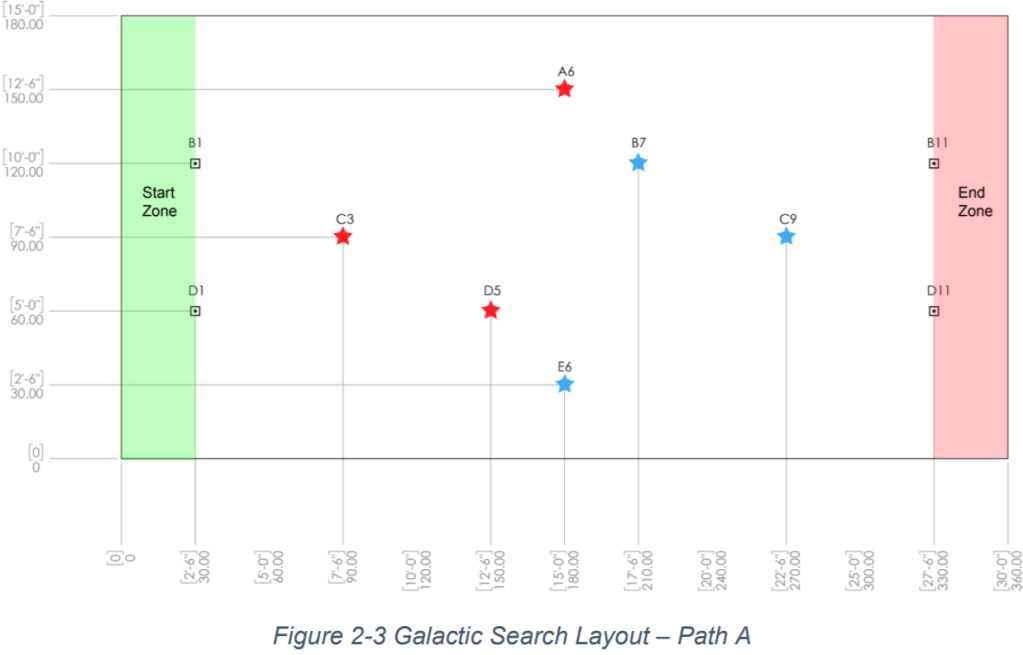
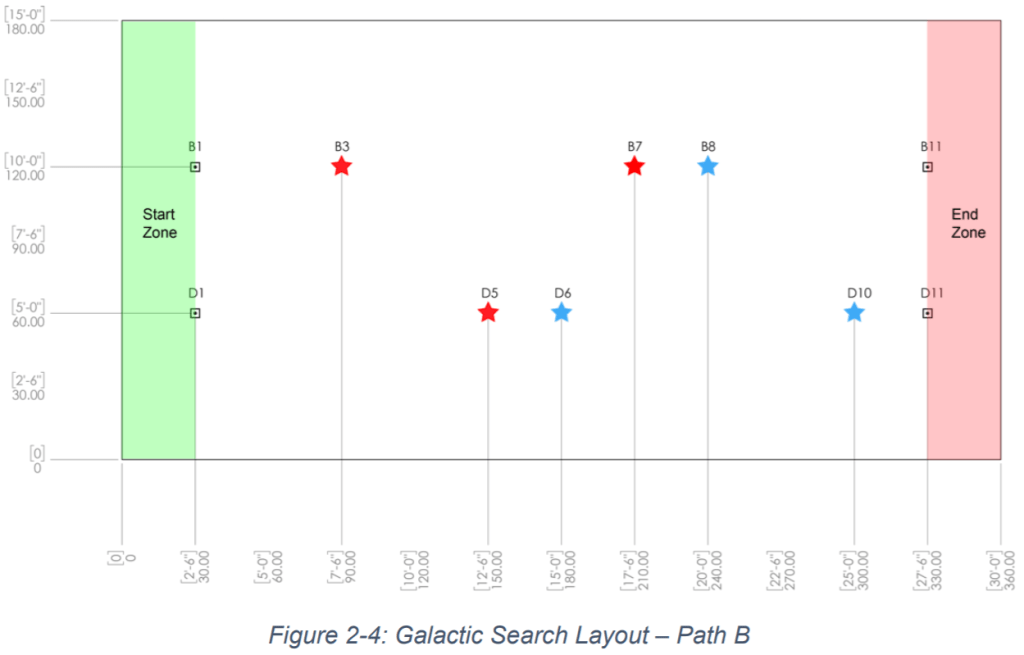
There are five sub-challenges, and the top three scores from those five count towards placement and the possibility of the winner and finalist awards. In the “Galactic Search” Challenge, teams autonomously grab three balls from two separate paths on the field. Scores are based on how fast the paths are executed. The two paths look like this on the field:
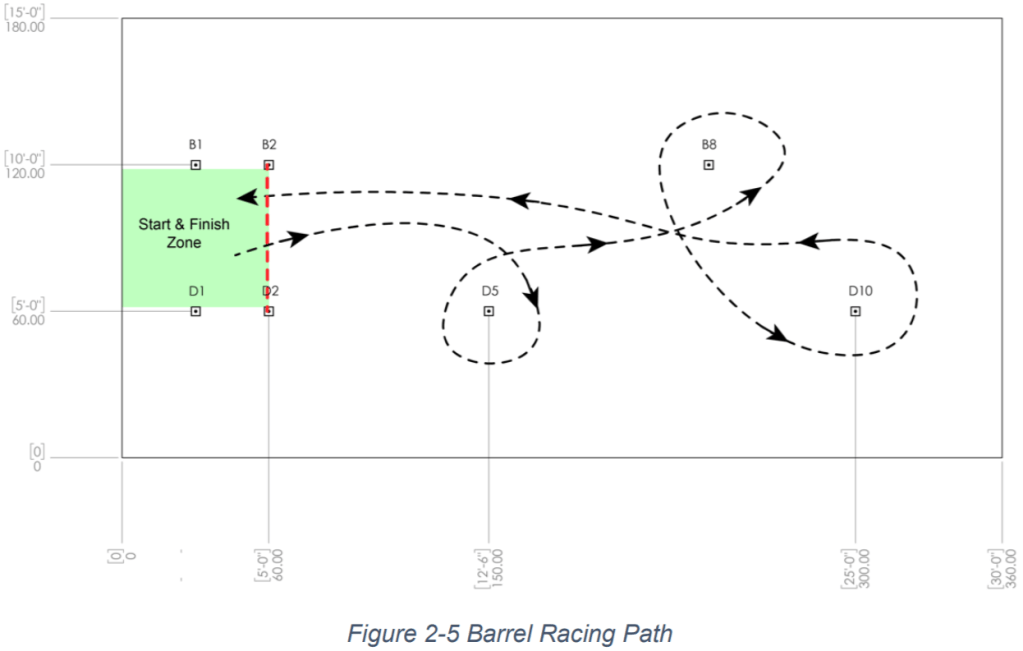
The “AutoNav” Challenge also tests autonomous by simply running various paths through the field and going for the fastest time. Those paths look like this:
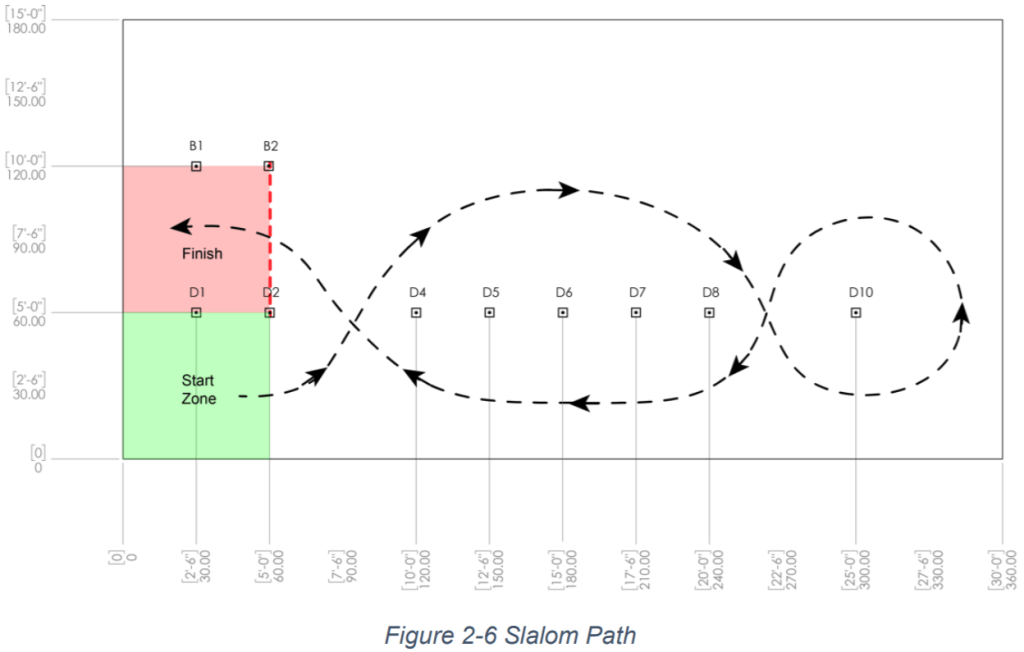
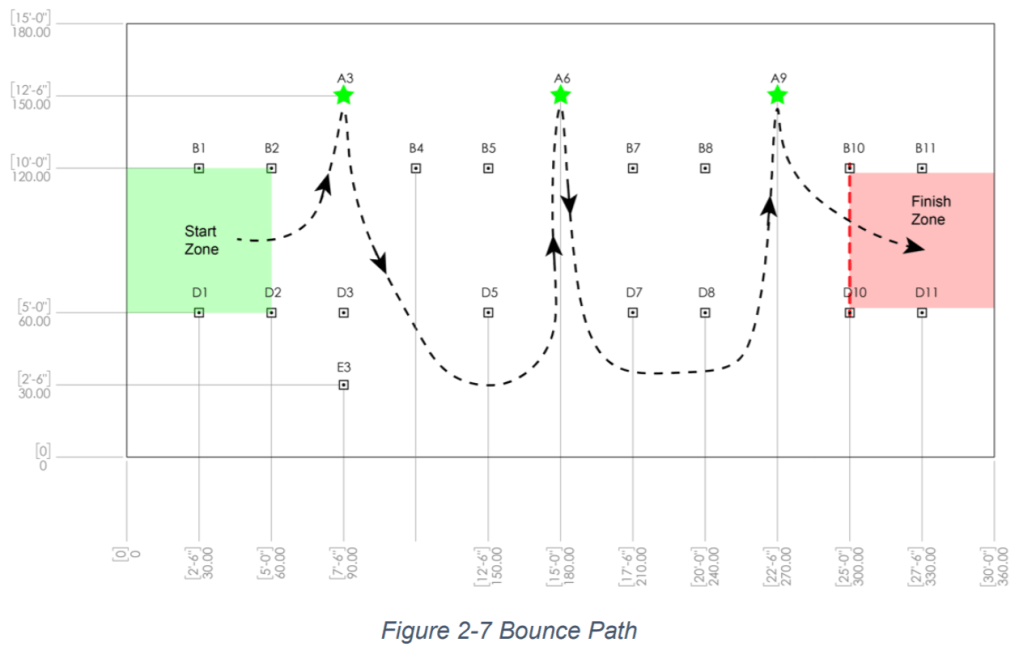
In the “Hyperdrive” Challenge, essentially the same thing as the “AutoNav” Challenge happens, except that this time it’s teleoperated by our drive team. There is, in addition, one extra path to run that looks like this:
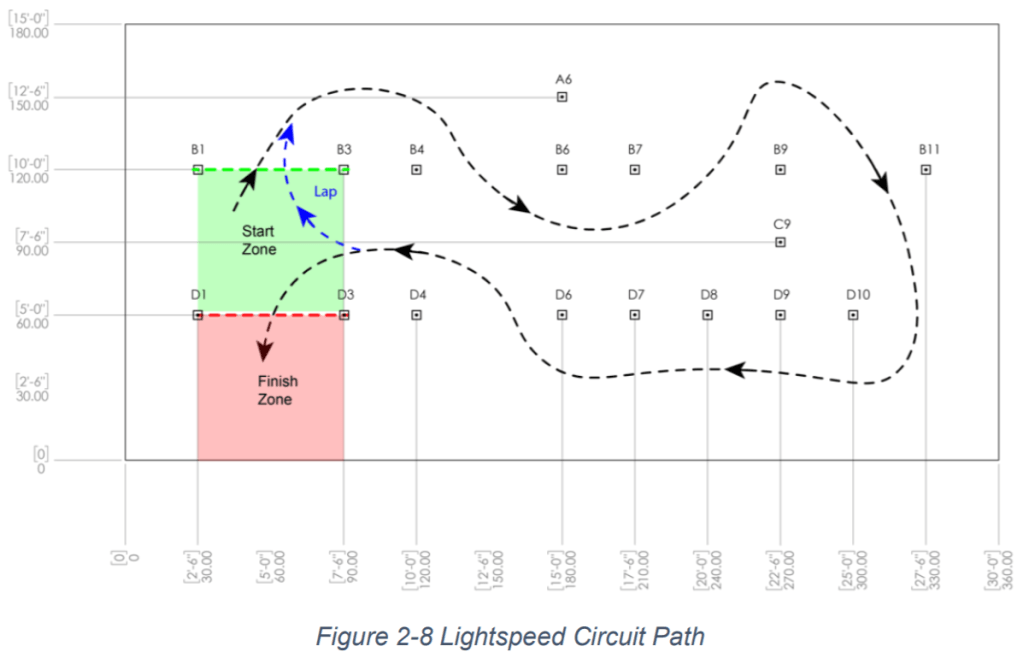
The “Interstellar Accuracy” Challenge is not based on time, but rather on how many points the robot can score from 15 shots (3 shots from each of the different color zones) in 5 minutes. The field layout for this challenge looks like this:
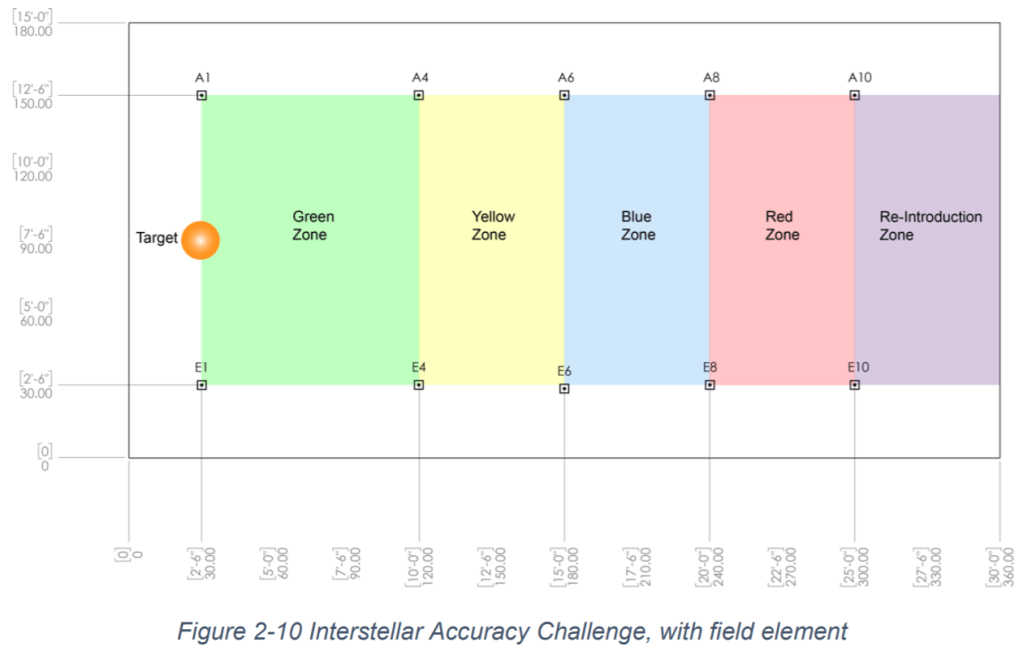
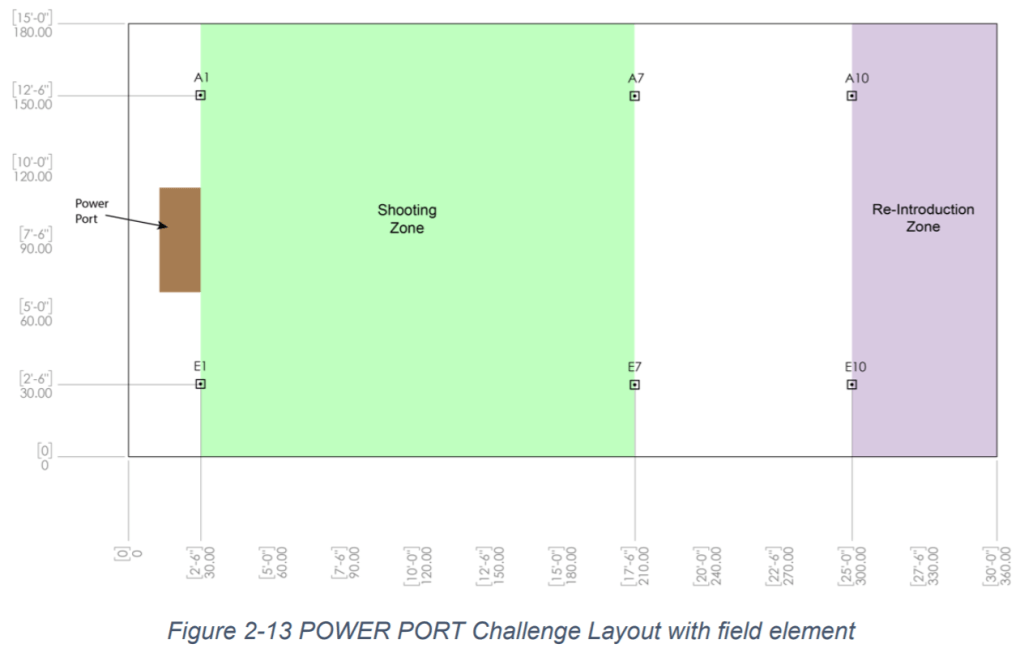
And finally, the “Power Port” Challenge simulated the teleoperated period by having the robot score as many points in the power port in one minute (while only cycling 3 power cells). The layout for the field looks like this:
These are quite a bit of things to do. When looking at the skills required to be extremely successful in these challenges (which we want to do), it seems like Torpedo might not be the best possible robot. I say that mainly because of its drivetrain. Because of the length and imbalance with that drivetrain, quick, accurate maneuvers are more difficult to execute effectively. However, the shorter drivetrain – and improved shooting capabilities among other things – of the new robot designed would give it a significant edge for our challenges. If we were to build the second robot, the breakdown of the pieces to be built, and machinery for each is as follows:
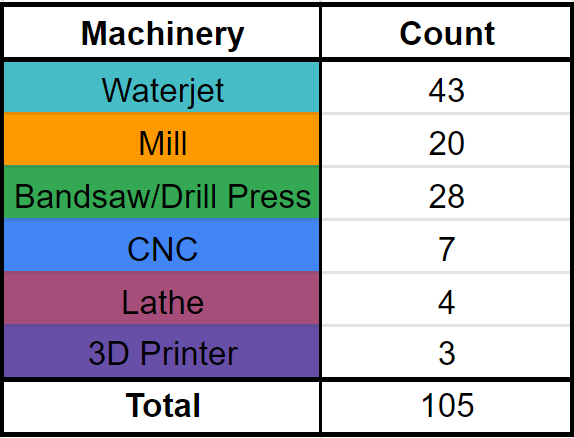
There is quite a bit of work to do if we build a new robot, but the main issue with that plan is the safety of everyone. We will continue analyzing the situation each day and exploring the possibilities of either building a new robot or simply preparing Torpedo for the Skills Challenge. Ultimately, I think the situation with Covid is going to be the deciding factor in our ability to actually execute the significant improvements on the new robot over Torpedo. However, even if we don’t build the new robot, there is plenty Torpedo can do and still win our event.
That duality of possible situations is reflected in our timeline in the form of two separate plans that illustrate how we would act for building a new robot, improving Torpedo, and both. The timeline uses February 1st as a possible re-opening date to go to school, despite the current PUSD timeline that says January 19th (in anticipation that the current PUSD timeline might change).
No matter whether we build a new robot or not, we have a very good chance at not only winning the Skills Challenges but also perfecting our pitches and presentation in order to win some of the other awards as well. With the right attention to details and execution, this season should be even more successful than the last.
Innovation Challenge
The Innovation Challenge is similar to the Game Design Challenge in that it affords a considerable amount of creativity and freedom. Really, the only constraint around the Innovation Challenge is this statement: “Identify a problem or opportunity and design a solution to help people (or a community of people) keep, regain, or achieve optimum physical and/or mental health and fitness through active play or movement.”
With that central core concept in mind, the weekend was mainly spent brainstorming various problems and opportunities to explore. In the end, we narrowed it down to the following problems into which we want to delve more:
- Lack of motivation and getting motivated to be active
- Regaining motivation after, recovering, and preventing injuries
- Keeping track of how your activity relates to nutritional goals
- Promoting mental health through active movement
- Incorporating activity in people’s daily lives
- Changing mentality and approach to working out from “big” to “incremental” and “consistent”
- Improving access to and affordability of equipment
Over the week we will talk to experts, research previous market solutions, and explore possible future market solutions in order to narrow down this list and finalize one problem. Once we have that problem finalized, our specific solution to that problem will be developed and decided as well.
Once we know exactly how we plan on solving that problem, our time will be spend evolving that solution design and preparing a business plan to effectively describe our idea and its applications and feasibility. Because of the considerable weight placed on the quality of the idea itself, we plan to spend a good amount of time in the beginning (now) coming up with a robust idea.
Timeline
In order to have an organized and effective season, we want to create and adhere to a concrete timeline that keeps us on the path to success. The following timeline has been created based on the discussions that occurred this weekend and gives a representation of what the team will be doing at any given time. The blue section describes the timeline for the Game Design Challenge. The green section gives general Infinite Recharge at Home tasks that will happen no matter what. The orange and purple timelines are two alternates depending on whether we build the new robot or not. The hope is that we will able to determine as soon as possible which one of these two timelines we will be adhering to. The red section details the timeline for the Innovation Challenge. If there are any questions, concerns, or comments on the timeline, as always, feel free to give feedback to the leads and execs so we can adjust accordingly.
Well, that has been a brief – but also not so brief – overview of the different challenges and what we will be doing this season. The full manual can be read here for more information on all of these challenges. Blogs will be a lot more regular (I want to say almost every day if not every day) and there is hopefully plenty of work for everyone to do so everyone can have fun. If we all work together, create thoughtful and effective designs and ideas, and focus on perfecting the tiniest of details, we can have a very successful season filled with good times. Here’s to another great season!
✌️
 Team 2658 Blog