
I know I haven’t been writing the blogs this year and I apologize for that. I hope everyone has still been able to get a good understanding of what has been going on through our general Wednesday meetings. In any case, since I don’t have a Wednesday meeting this week to recap, consider this a long overdue blog and progress report.
This last weekend we had our Infinite Recharge at Home Judged Component, Chairman’s, Dean’s List, Game Design, and Innovation Challenge interviews. With the exception of the Skills Challenges (and the additional Innovation Challenge submissions), we are essentially done with the season. So, without further ado, here is a “short” look at what we did for each challenge.
Infinite Recharge at Home
Ever since we knew we would play Infinite Recharge again, we knew a fundamental rebuild of the robot was necessary to significantly boost our performance. So, our design team set out to prepare just that. Starting from a restructured priority list we developed a completely different robot profile to play the game more efficiently.
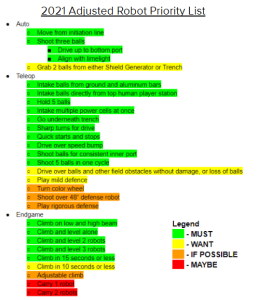
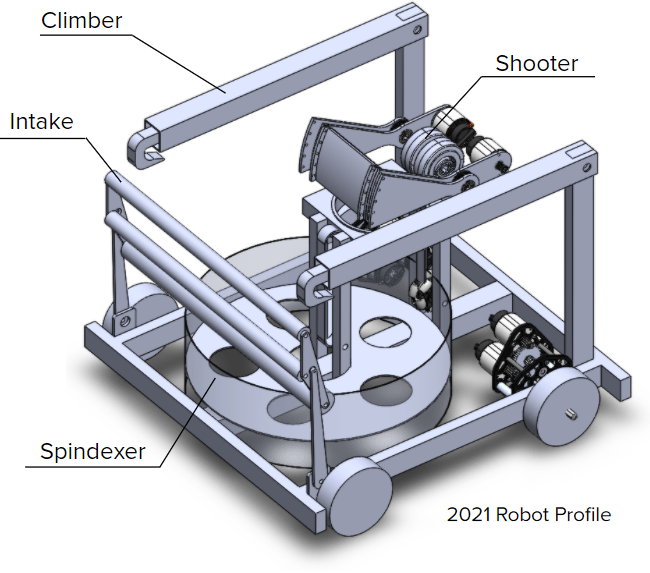
From this new profile we went through all the regular processes we go through each year to develop our robot, but with a few key tweaks. We did less prototyping because…well…pandemic. To account for that lack of data we instead did a heavy amount of review, redesign, and tweaking. What we normally only have 2 weeks to do during the season we now spent roughly 4-5 months on it, ensuring that every detail was accounted for. In the end, Whirlpool, our 2021 robot is what came out.
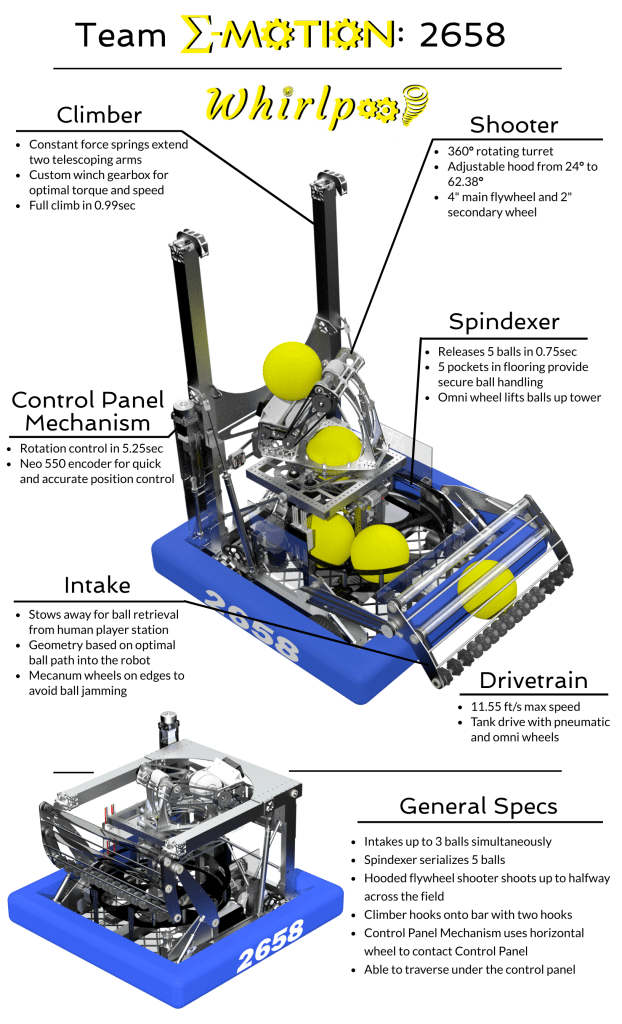
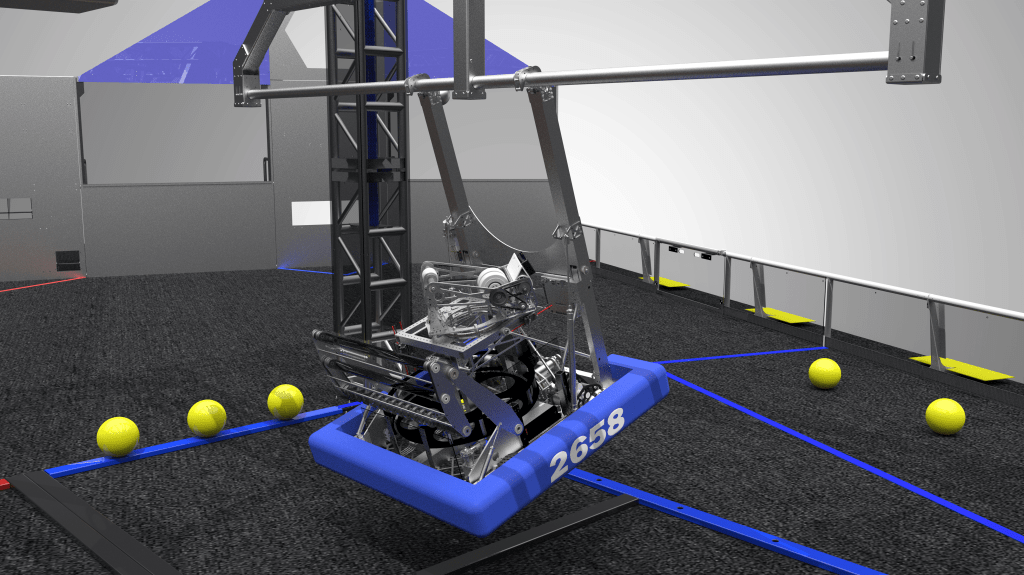
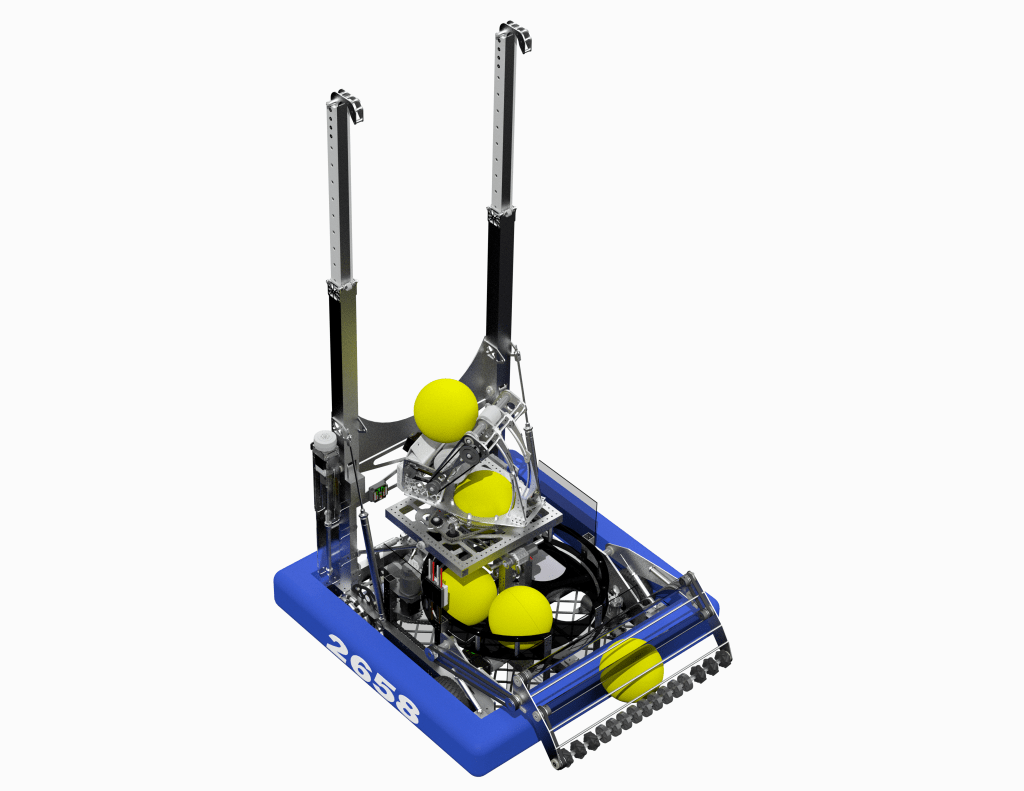
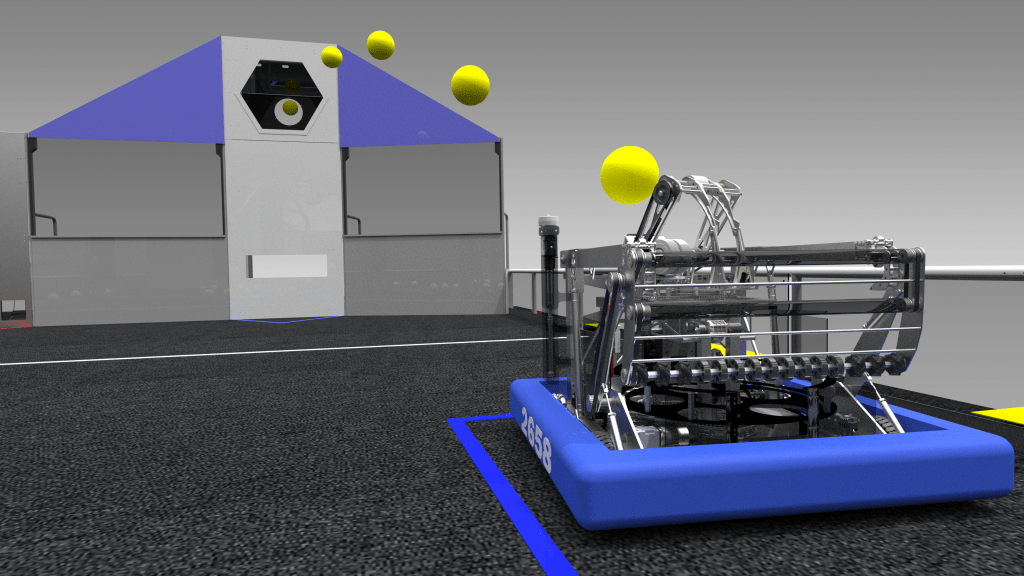
All in all, the thorough and extensive engineering process we underwent to not only develop the architecture for this robot but also the details and specificities of its mechanisms was exactly what this team can and should do to not only create stellar robots but, in the end, learn. I plan to write a series of blogs in the coming months going into more detail on some of these processes and what made Whirlpool such a great robot.
But, the most important thing going forward for this robot will be actually building it (once Covid gets just a bit better). This will not only allow you to crush it at off-season competitions if there are any, but will be perhaps the best training the team has ever gotten.
Game Design
Rather than just randomly put together a cacophony of ideas together to create a dismantled game, we set out from the beginning to figure out what makes a successful game. Through our analysis of the past 20 years of FRC games we came up with a list of principles that would serve as the fundamental structure for our game.
From that list we set out to figure out captivating and innovative elements of the game that would capture all of those elements. Each element was marked as to what principles it covered and, in the end, we found the right combinations of element ideas that were not only interesting and worked together but also hit each of the principles we needed.
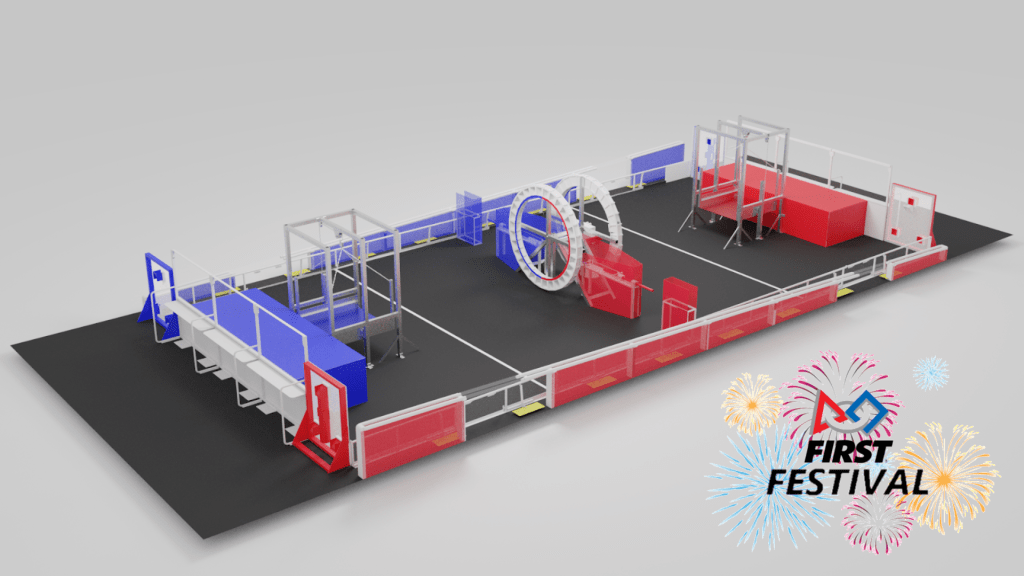
From there we set out to develop rules and a full CAD, ready to be built. What came out was FIRST Festival. You can see an overview of the game and how it works here. You can also see an animation of the gameplay here (this will be expanded and audio will be added soon)(also WordPress doesn’t let me embed videos anymore).
Innovation Challenge
With our Innovation Challenge, we set out first to determine what problem in the world of fitness would be most appropriate to address. Through some market research and talking to experts, we finally settled on solving the problem of inadequate access to equipment for exercise. This was later grouped with lack of information as well.
After some more deliberation and plenty of ideas, we finally settled on Green Spot, a mobile application for finding nearby fitness equipment in parks as our Innovation Challenge solution. Users input their fitness goals and are provided with a list of nearby parks that have equipment to satisfy those goals. When looking at a park users can see what equipment they have as well and how to use it and even receive a workout recommendation based on that particular park’s equipment. Users can also communicate within groups with friends to find new parks and coordinate workouts.
You can see a general overview of how the app works here. In addition to actually developing the layout of the app, we also prepared a business plan and associated strategies to ensure that we could take the concept for Green Spot and make it a reality.
Tackling all three challenges (as well as the skills challenges) was always going to be a difficult task. But, nevertheless, this team was able to show its true strength by not only managing to finish all three but with flying colors as well. Our presentations and interviews with judges for all three showcased each brilliantly and the judges seemed eager for more. Although I do expect some awards for the hard work everyone has put in, it is still important to look back and enjoy the things we’ve created, the lessons we’ve learned, and the fun we’ve had. For those not working on the Skills Challenges, take a break and relax for a bit. We’ll be back at work soon enough don’t worry 🙂
✌
 Team 2658 Blog